

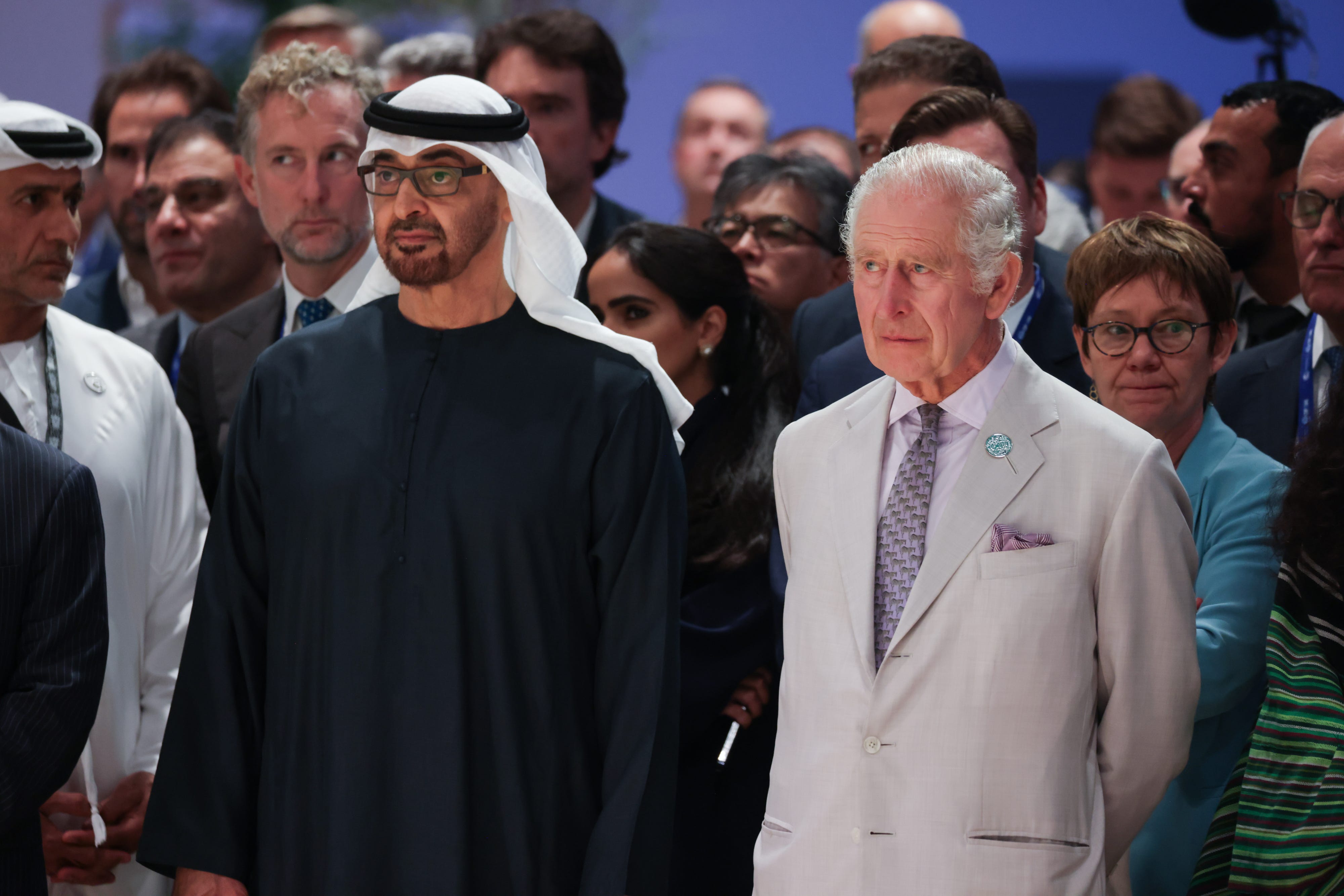
Photo credit. https://www.flickr.com/photos/unfccc/53366921209/
This week, King Charles welcomed Sultan Haitham of Oman to Windsor, while President Emmanuel Macron visited Abu Dhabi. For businesses working between Britain and the UAE, the question is how the two governments manage the relationship between visits and during disagreements.
Manchester City and the investment relationship
In findings published on 29 September, an independent commission concluded that Manchester City had breached Premier League rules. It found that the club used commercial contracts to disguise more than £830 million of funding between 2009 and 2018. City deny wrongdoing and announced their appeal on 2 October.
The club is part of City Football Group, majority-owned by Sheikh Mansour bin Zayed, one of the UAE’s vice presidents. Bloomberg reported on 2 October that Emirati officials had warned London that sanctions against City could affect their appetite for major new investments in Britain.
The reported warning does not establish that investment has been withdrawn. But the club and the investment relationship share a senior figure: Khaldoon Al Mubarak chairs Manchester City and runs Mubadala, the Abu Dhabi sovereign investor involved in the UAE’s investment partnership with Britain.
Andy Burnham’s relationship with the owners predates his arrival in Downing Street. As mayor of Greater Manchester, he worked with them on investment in the city’s east. The BBC reported that he declared hospitality at two dinners with Khaldoon Al Mubarak at the Etihad Stadium, in 2017 and 2018. He also met Al Mubarak formally at the government’s Global Investment Summit in 2021.
Responding to the verdict, Burnham expressed concern about the owners selling, while saying he was not intervening in the independent process. He has since asked the Greater Manchester Combined Authority to search its records of his dealings with the club, saying he wants full transparency.
Britain has an interest in maintaining the investment relationship. Ministers also need to leave the Premier League’s disciplinary process, including City’s appeal, free from political pressure.
The Telegraph and foreign ownership
On 16 October, the government published Ofcom’s report on RedBird IMI’s proposed purchase of the Telegraph. The media regulator submitted its assessment in March 2024. It concluded that International Media Investments (IMI), the venture’s Abu Dhabi backer, had incentives to influence the newspaper’s editorial line and could do so.
IMI, owned by Sheikh Mansour, supplied three-quarters of the capital behind the £600 million bid, according to the Observer. It rejected Ofcom’s assessment, calling its assumptions arbitrary and biased.
On 16 October, Culture Secretary Lisa Nandy cleared the way for German publisher Axel Springer’s planned purchase by declining to refer it for a further competition investigation. Publication of Ofcom’s earlier report has brought the original ownership proposal back into public debate.
Britain’s interest in attracting Emirati investment does not remove the need to scrutinise individual transactions, particularly where editorial independence is at stake. Equally, opposition to one newspaper acquisition should not be treated as a judgement on Emirati investment generally.
Sudan and Britain’s responsibilities
In April 2024, the UAE reportedly cancelled four meetings with British ministers after London failed to defend it against accusations at the UN that it supported Sudan’s Rapid Support Forces (RSF), the paramilitary group fighting the country’s army. The UAE denied providing that support.
In July this year, Amnesty International concluded that the RSF had committed crimes against humanity and ethnic cleansing during its campaign to seize el-Fasher. It criticised Britain for approving £377 million in arms-export licences to the UAE between July 2024 and December 2025, citing the risk of weapons reaching Sudan.
Middle East Eye reported that Nathaniel Raymond of Yale’s Humanitarian Research Lab told MPs in June that Britain had prioritised its ties with the UAE over preventing atrocities in el-Fasher. According to the same report, development minister Jenny Chapman questioned whether pressure on Abu Dhabi would have been enough to prevent the massacre.
The commercial relationship
The two governments launched their Sovereign Investment Partnership in 2021, targeting £10 billion over five years. By April this year, the UAE government said it had committed nearly £30 billion. That establishes the scale of the partnership, but the announcement predates the latest political disputes.
Abu Dhabi’s investment office, chamber of commerce and financial centre brought a delegation to London from 13 to 15 October. The programme included an investment forum and 56 meetings jointly organised by the chamber and the Abu Dhabi Family Business Council. Whether those discussions produce further investment will be a more useful test than the number of meetings.
Trade in goods and services between Britain and the UAE reached £25.2 billion in the twelve months to March 2026, up 3.9 per cent on the preceding year. These figures also largely precede the autumn disputes.
Britain and the six Gulf Cooperation Council states concluded trade negotiations in May, but the agreement is not yet in force. Lord Davies, the new UK chair of the UAE–UK Business Council, wants a separate bilateral agreement to supplement it.
Who carries the relationship?
Britain’s relationship with the UAE has involved both royal and ministerial contact. Andrew Mountbatten-Windsor, then the Duke of York, served as Special Representative for International Trade and Investment from 2001 to 2011. He was unpaid, but the government publicly funded his official travel.
By May 2010, Andrew had visited the UAE nine times in his trade-envoy role, according to a Sunday Telegraph audit. Those repeated visits show the personal attention Britain devoted to the relationship.
Middle East Eye reported in February on November 2010 emails in which Jeffrey Epstein asked Andrew to recommend him to Sheikh Abdullah bin Zayed, the UAE’s foreign minister. Andrew subsequently wrote that Sheikh Abdullah wanted to introduce Epstein to Sheikh Mohamed bin Zayed, then Abu Dhabi’s crown prince. That account does not establish that the proposed introduction took place. Andrew has denied wrongdoing regarding Epstein.
Royal engagement with the UAE has continued. At the British government’s request, Prince William visited Dubai in February 2022, attended Expo 2020, and promoted conservation initiatives. The King attended the COP28 climate summit in Dubai in 2023, at Sheikh Mohamed’s invitation and the government’s request.
Ministers also maintain direct contact. Foreign Secretary Ed Miliband spoke to Sheikh Abdullah on 18 October about regional developments and bilateral cooperation.
A senior figure close to the relationship believes London gives the UAE too little sustained attention. A repeated concern is that newer MPs increasingly see the Gulf through the lens of the conflict in Gaza.
What to watch
The practical tests are whether new investment commitments become completed projects, whether the Gulf trade agreement takes effect, and what a separate UAE agreement would offer businesses. Examine changes in investment alongside market conditions and individual project terms, rather than automatically attributing them to diplomatic tensions.
For Britain, maintaining senior contact and applying independent scrutiny are both necessary. Emirati investors should be able to expect consistent rules and access to the ministers responsible for the relationship. Decisions on regulation, sporting discipline and arms exports must follow the applicable rules, regardless of the investment relationship.
Sustained attention means ministers follow through on commitments, explain difficult decisions, and remain available when disagreements arise. That is the work Britain needs to organise between state visits and investment announcements.
Emirates Wire uses AI tools to assist with research, early drafting, fact-checking and copy-editing. Steve Moore reviews, edits and personally approves every sentence before publication.