

By Steve Moore
Saturday 31 October 2026
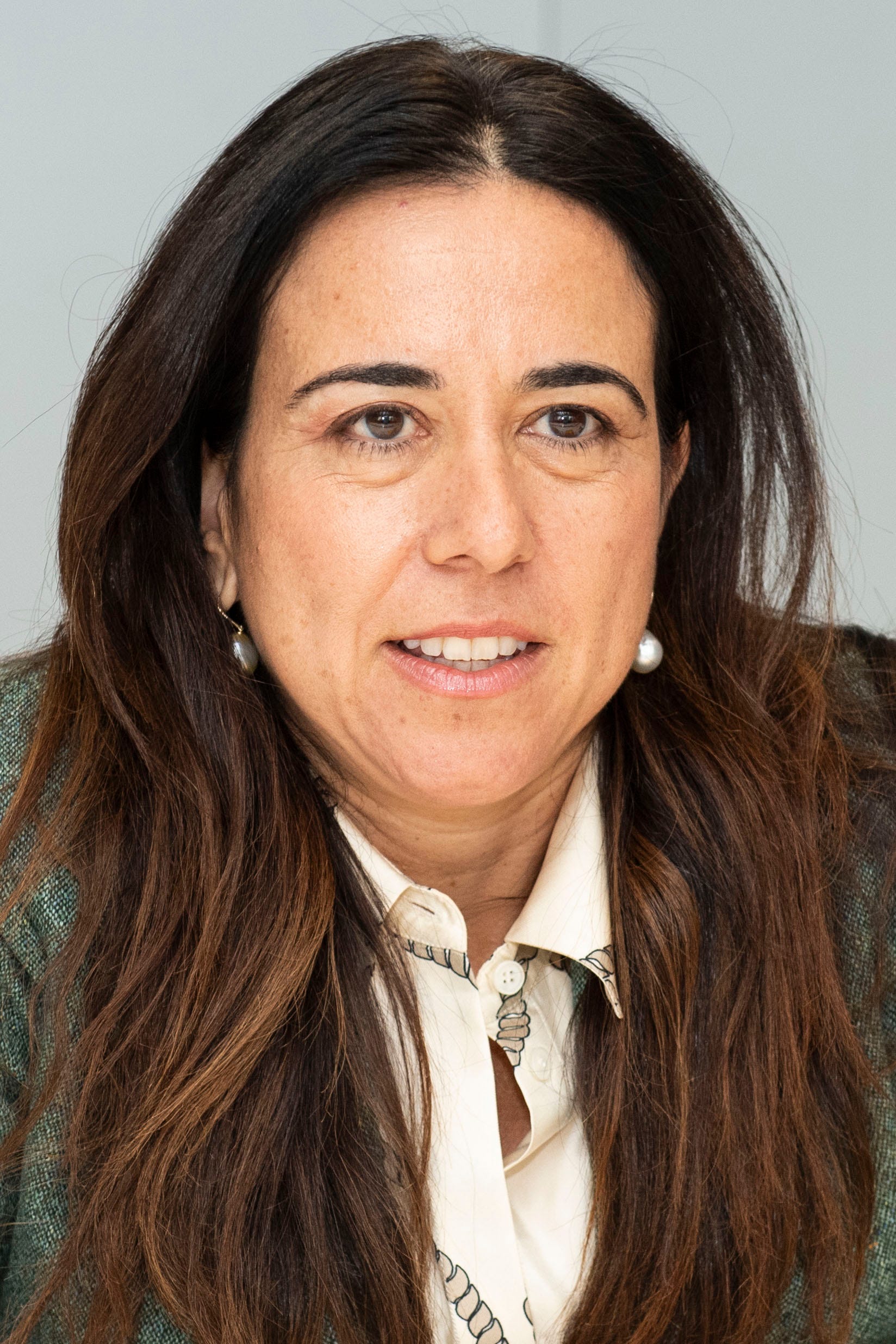
Lana Nusseibeh spent more than a decade speaking for the United Arab Emirates at the United Nations. She now wants to lead the organisation. To win its trust, she must convince governments that she is prepared to challenge her own.
She announced her candidacy on 21 October and took leave from her government responsibilities. Her promise was explicit: “I wish to offer myself to this office as I would serve it: speaking frankly with every government and answering to none”.
Her record gives governments a way to assess that promise. Her work on Gaza shows how she negotiates when states disagree; her defence of Emirati policy in Sudan has prompted critics to question her independence.
From Abu Dhabi to New York
Her parents sent her to boarding school in Britain after Iraq invaded Kuwait in 1990. In an interview with Wycombe Abbey, she recalled the decision being made at short notice and not wanting the drive to the school to end. Life away from Abu Dhabi took time to get used to. She read widely as she settled in and was relieved when her younger sister joined her a year later.
Her family has roots in Jerusalem; her uncle is the Palestinian scholar Sari Nusseibeh. She studied history at Queen’s College, Cambridge, then took a master’s in Israeli and Jewish Diaspora Studies at SOAS in London. Before joining the UAE government in 2006, she consulted for the UN cultural agency UNESCO and researched security at the Gulf Research Centre.
In government, she advised on human rights and political participation. She later led the foreign ministry task force that helped bring the International Renewable Energy Agency’s headquarters to Abu Dhabi, then became the founding director of the ministry’s Policy Planning Department. She became the UAE’s permanent representative to the UN in September 2013 and remained in the post until 2024.
She also worked within the organisation, serving as president of the UN Women Executive Board in 2017. Diplomats in New York describe her as a skilled negotiator and competent manager, Reuters reports. Those are useful qualifications for an office whose holder must keep governments talking without being able to order them to agree.
Keeping relations with Israel
Nusseibeh’s defence of engagement with Israel shows both the strengths and the limits of that approach. In August 2020, she argued that the UAE’s agreement to normalise relations could help reopen negotiations on Palestinian statehood. Refusing to engage had failed to deliver peace, she told The National. In her account, the agreement had halted an imminent annexation threat and created an opportunity for talks.
By February 2024, she was defending continued relations amid the destruction in Gaza. She pointed to cooperation that had allowed the UAE to establish a field hospital in Gaza and arrange a maritime hospital at Egypt’s Al Arish port. She acknowledged that this was insufficient and called for a humanitarian ceasefire and a two-state solution.
“Will we get that by talking to the people who agree with us? No,” she said at the World Governments Summit. “We will get that by talking to the people who disagree with us”.
In September 2025, she warned that annexation in the occupied West Bank would cross a “red line” for the UAE and severely undermine the Abraham Accords. She maintained that support for Palestinian statehood had been part of the accords’ purpose from the outset.
Her language had moved from optimism about what closer relations could achieve to warnings about what might destroy them. She continued to argue for engagement, but the distance between humanitarian cooperation and a political settlement remained. Her record invites a practical question: when does keeping a channel open produce enough to justify the relationship?
The Gaza compromise
Her work on Gaza aid offers one way to judge that question. On 22 December 2023, the Security Council adopted the UAE’s resolution by 13 votes to none, with the United States and Russia abstaining. Nusseibeh told the Council that negotiations had continued until the last minute.
Resolution 2720 requested a senior humanitarian and reconstruction coordinator to help expedite relief and verify the humanitarian nature of aid consignments entering Gaza through countries not party to the conflict. It demanded expanded aid access, but the final text omitted the original call for an urgent suspension of hostilities. Instead, the Council called for steps to create the conditions for a sustainable cessation of hostilities.
The UAE had secured agreement on a way to organise relief. It had not secured the ceasefire Nusseibeh continued to call for. That distinction matters when assessing her record: the vote demonstrates an ability to negotiate a compromise, but its humanitarian value depends on the aid that reaches people.
Her campaign proposes similar initial agreements, including local truces and arrangements for humanitarian access, as steps towards wider settlements. The argument has force where a comprehensive deal is out of reach. People waiting for aid cannot wait for diplomats to resolve every disagreement. But governments must treat a limited agreement as an obligation to act, rather than a reason to stop trying.
Answering for Sudan
Sudan raises a harder question about whom she would be willing to challenge. The UAE denies allegations that it has supported the Rapid Support Forces (RSF), the Sudanese paramilitary group accused of atrocities against civilians.
In September, the UN fact-finding mission’s chair said it had found reasonable grounds to believe that a transnational network facilitated RSF military operations, linking individuals and entities in the UAE, Chad, southeastern Libya and Puntland in Somalia. That statement did not establish UAE state responsibility or name Nusseibeh. It does explain why her assurances of independence deserve scrutiny.
Kenneth Roth, the former executive director of Human Rights Watch, criticised her denials concerning UAE support for the RSF, Reuters reported this week. Sudanese advocate Husam Mahjoub questioned whether a senior defender of Emirati policy could lead a UN expected to hold powerful states accountable.
At the General Assembly dialogue on Tuesday, Nusseibeh said Sudan would be a leading priority if she became secretary-general. She condemned RSF atrocities and pledged to support UN fact-finding missions pursuing accountability and transitional justice.
Would that support hold if investigators reached adverse conclusions about Emirati officials or entities? Would she defend their work against pressure from Abu Dhabi, or correct a statement she had made if the evidence contradicted it? Her service to the UAE does not establish personal responsibility for its alleged conduct. Her own decisions and statements are nevertheless part of the record on which governments must judge her.
Winning the appointment
The General Assembly appoints the secretary-general on the Security Council’s recommendation, and any of the Council’s five permanent members can veto a candidate. China, France, Russia, Britain and the United States therefore have a decisive say.
Nusseibeh would be the first woman to hold the post. Her experience gives governments reasons to consider her seriously, but neither that experience nor the significance of a first female secretary-general answers the question of independence. A candidate needs the consent of powerful governments to win, then the authority to challenge them once in office.
The judgement
Nusseibeh has a credible case for the job. She knows the UN, has negotiated on some of its most contested business and offers a practical account of how diplomacy can reduce suffering when a full settlement remains out of reach.
The reservation is whether she would confront a government whose cooperation she valued. A secretary-general needs to preserve relationships, but sometimes the job requires making an ally uncomfortable. Her promise to answer to no government must hold in those circumstances.
An Emirati candidate should face the same standard as a candidate from any other country. Nusseibeh would strengthen her case by explaining how she would defend investigators against political pressure, including pressure from former colleagues. Her experience gives governments reasons to listen. Her answers on Sudan will help them decide whether to trust her.
If you have worked with the UN, I would welcome your view on where quiet diplomacy helps and when its leaders need to speak publicly. Send your thoughts to steve@emirateswire.co.uk, and thank you for reading.
Steve
Emirates Wire uses AI tools to assist with research, early drafting, fact-checking and copy-editing. Steve Moore reviews, edits and personally approves every sentence before publication.