

Registration for the evening is here:
https://events.emirateswire.co.uk/
Attendance is free and on the record.
In the week before 9 September, everyone who has registered will receive an email inviting them to submit a question in advance. We will read every one, and they will shape what we put to the panel on the night.
Yesterday we wrote about the economics. Today, the harder half.
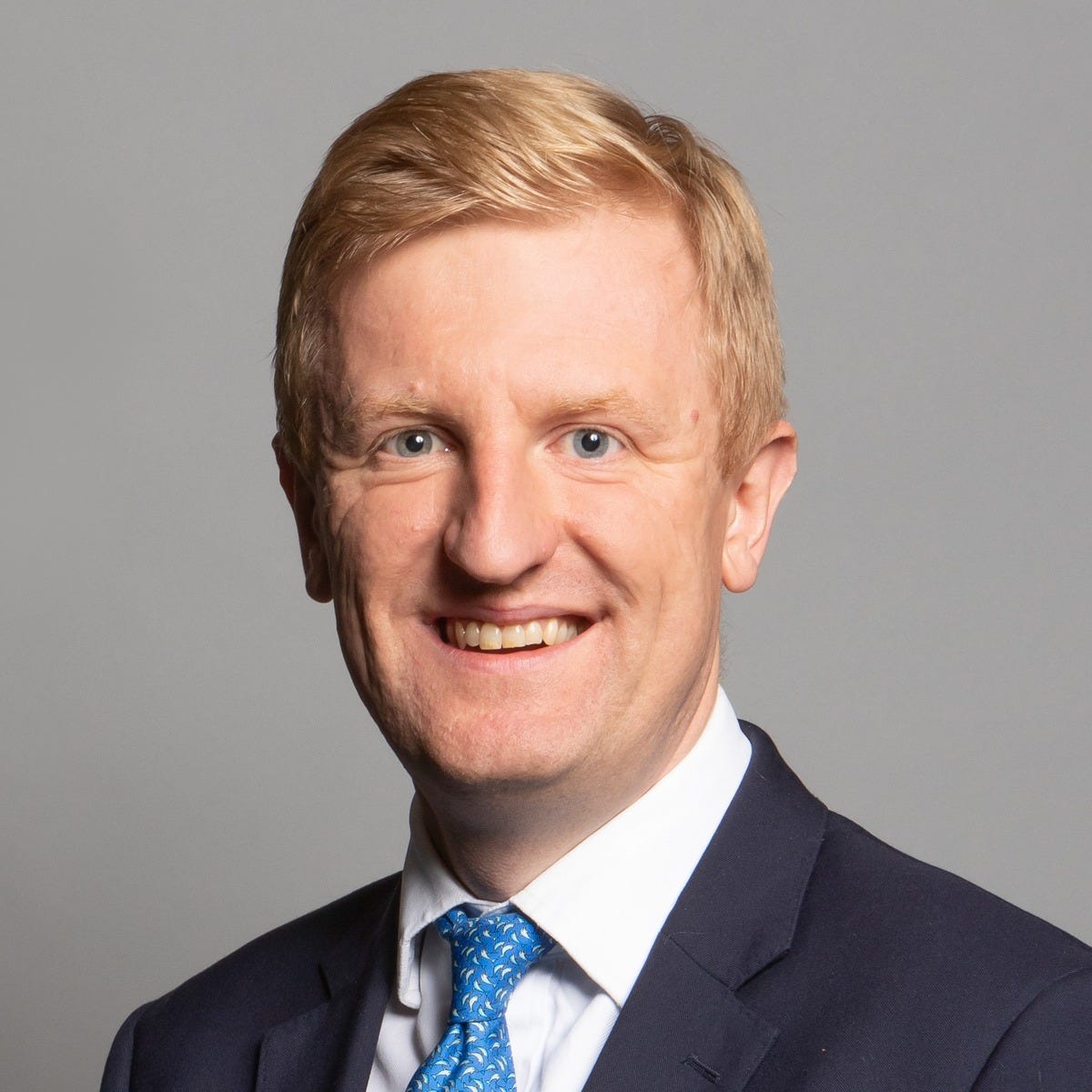
In March, after Iranian attacks on the UAE, sixteen parliamentarians from both Houses and across party lines signed a statement of solidarity with the Emirates. The UAE All-Party Parliamentary Group convened the group. Its chairman is Sir Oliver Dowden.
Speaking to The National afterwards, he called the attacks illegal and unprovoked, and said Britain has a historic and long-standing duty and interest in defending the interests of the Gulf states, the UAE in particular.
Earlier that month, at a Downing Street press conference, the Prime Minister had struck a different emphasis. Britain would not be drawn into the wider conflict.
Both things can be held at once. We want to ask Sir Oliver about the space between them on 9 September.
What Britain says and what Britain does
The commercial relationship is not in doubt. Trade in goods and services between the UK and the UAE was £25 billion in 2025, up from £17.5 billion in 2016. The Sovereign Investment Partnership, launched in 2021 with a £10 billion five-year target, has committed close to £30 billion across more than fifty investments — almost triple the target, in under four years. The UK concluded free trade agreement negotiations with the Gulf Cooperation Council in May, the first G7 country to do so. Ratification runs into 2027.
The diplomacy is less settled.
Sir Oliver has been publicly sceptical of the American deal with Iran. In Parliament in June, he questioned whether early sanctions relief, access to frozen Iranian assets and $300 billion in reconstruction aid might find their way back to the Islamic Revolutionary Guard Corps, an organisation he holds responsible for a great deal of damage to regional and global stability, directly and through its proxies.
That is a hawkish position, and it is not obviously the government’s. So what can an opposition MP chairing a parliamentary group actually deliver for the country he advocates for, and is the warmth of the parliamentary relationship matched by anything in Whitehall?
What we are asking him
What Britain’s historic duty to the Gulf states amounts to in practice, in a conflict Britain has said it will not be drawn into. Whether there is a version of that duty that stops short of military commitment and still means something.
Whether the UK-GCC agreement survives the current regional situation intact, and what becomes of the separate bilateral deal the Emirates have been pressing for. Their ambassador in London has called the GCC agreement a solid foundation, which is not the same as calling it enough.
What the Emiratis want from Britain that they are not getting. Every bilateral relationship has an unmet ask. We would like to know what this one is.
Whether the parliamentary relationship carries real weight or is largely ceremonial. Sixteen signatures on a statement of solidarity is a gesture. What followed it.
How a Conservative former Deputy Prime Minister exercises influence on foreign policy from opposition, and whether the UAE relationship is genuinely cross-party or simply uncontroversial.
And the less comfortable one. The framework the two governments agreed in April covers judicial cooperation and illicit finance alongside trade, defence and AI. That is a wide agenda. How is the quieter end of it progressing?
Who else is there
Sir Oliver will be joined by Dr Burcu Ozcelik, Lead of the Middle East, North Africa and Turkey Security Programme at RUSI, and James Swanston, an economist covering the Middle East and North Africa in the EEMEA Economics Team at Barclays. David Waddell, senior business producer and reporter at BBC News, is chairing.
We wrote about James yesterday. Burcu is next.
The evening
The UAE and the widening Gulf conflict: what happens next?
Venue: National Liberal Club, 1 Whitehall Place, London SW1A 2HE
Date: 9 September
Programme: drinks from 6.00 pm; discussion at 7.00 pm
Registration:
https://events.emirateswire.co.uk/