Dubai Islamic Bank agrees to buy Emirates Islamic
Emirates NBD would own 32.5% of a Dh585bn Islamic bank. The Houthis claim a strike on Saudi Arabia’s biggest refinery, and the US tells Americans in the region to stay alert.

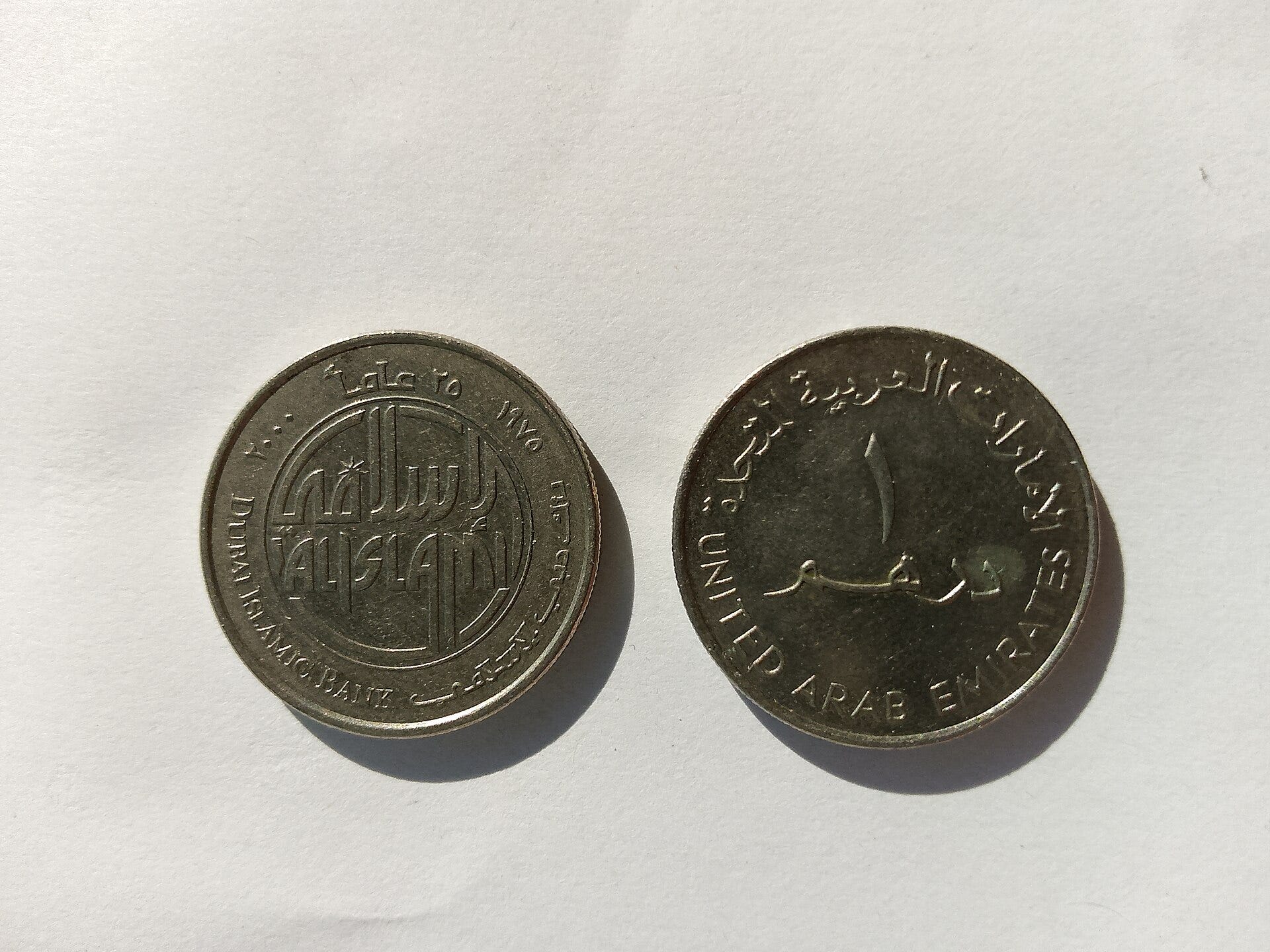
The UAE one-dirham coin issued in 2000 to mark 25 years of Dubai Islamic Bank, founded in 1975, is shown beside the standard reverse. Archive photograph. Photo: LihUlv via Wikimedia Commons (CC0)
Good morning. Dubai Islamic Bank has agreed to buy Emirates Islamic from Emirates NBD in an all-share deal that would create the UAE’s largest Islamic banking group. In Saudi Arabia, the Houthis say they hit the Ras Tanura refinery, and oil rose. The US Mission to the UAE has told Americans across the Middle East to exercise “heightened vigilance”.
Subscribe to Emirates Wire for weekday UAE briefings and a longer read on Saturday. We follow the decisions in Washington and the Gulf, and the changes that reach your household or business.
Dubai builds an Islamic banking champion
Dubai Islamic Bank (DIB) will buy all of Emirates Islamic by issuing about 3.49 billion new shares to its owner, Emirates NBD. That is 0.642 DIB shares for each Emirates Islamic share. Emirates NBD would own 32.5% of the enlarged bank, and DIB’s share capital would rise from about Dh7.24bn to Dh10.73bn.
The combined group would have about Dh585bn ($159bn) in assets, based on figures as of 30 September. The banks say that would make it the world’s second-largest listed Islamic banking group. Emirates Islamic alone had assets of Dh158.3bn at the end of the third quarter.
“Today marks a defining moment for DIB and for Islamic finance,” said Fadhel Abdulbaqi Al Ali, DIB’s chairman. Sheikh Ahmed bin Saeed Al Maktoum, Emirates NBD’s chairman, called the deal “an important opportunity for Dubai to create a leading Islamic banking champion”.
The banks have not put a cash value on the deal or given a completion date. It still needs shareholder approval and final clearance from the Central Bank of the UAE and the Capital Markets Authority. For customers, the banks point to shared infrastructure and “optimisation of the branch network” after completion. Emirates Islamic has 36 branches.
On Wednesday, DIB shares rose 1.59% to Dh8.92 and Emirates NBD fell 1.16% to Dh34.20. Dubai’s index gained 0.44% to 6,387.77, and Abu Dhabi’s rose 0.48% to 9,919.59.
Houthis claim a strike on Ras Tanura
The Houthis said on Wednesday that they had attacked Ras Tanura, Saudi Arabia’s largest refinery, and Riyadh’s financial district. Their spokesman, Yahya Saree, said the refinery strike was “accurate and direct” and caused fires. The Saudi-led coalition said air defences destroyed four drones over Ras Tanura, that fragments fell, and that an initial assessment found no injuries. It did not say the refinery had been hit.
NASA satellite imagery reviewed by Reuters showed thick black smoke around the refinery, covering about 600 square kilometres. Aramco and the Saudi government did not respond to requests for comment. The refinery can process 550,000 barrels a day, and it sits next to a major export terminal for Saudi crude.
The attacks followed coalition strikes on the Houthi-held port of Hodeidah and on targets in Saada and Amran. The Houthis had warned that “Jeddah port and all Saudi enemy ports on the Red Sea coast will be targets” if Hodeidah was bombed, and told port workers to evacuate. As of early Wednesday, maritime security firm Vanguard Tech had recorded no attacks on Saudi ports.
Oil rises on the Houthi claim
Brent fell in the morning, then rose 1.97% to $93.20 a barrel by 17:04 GMT. PVM’s Tamas Varga said the Houthi statement had triggered the rally. Both Brent and US crude had already gained more than 2% on Tuesday. OPEC+ meets on Sunday, and LSEG’s Zhenqiang Seto pointed to uncertainty “especially with the UAE no longer restricted by OPEC+ policies and Iraq seeking higher oil output capacity”.
Iran claims more mine strikes in Hormuz
The Revolutionary Guards’ navy said two oil tankers hit mines early on Wednesday while using what it called a “fake route” through the Strait of Hormuz, and that fires broke out in their engine rooms. It did not name the ships. There has been no independent confirmation. The Guards also said they had targeted and stopped a container ship sailing an “unauthorised” route near the strait.
In Washington, President Trump told the New York Post that “up until really the end of January, pretty much, you know, we’re funded”. The Times of Israel read that as a window for any new US offensive before a Democratic majority in Congress could curb it.
US tells Americans in the Gulf to stay alert
The US Mission to the UAE has issued a security alert urging Americans across the Middle East to exercise “heightened vigilance”. It warned that hostilities could escalate rapidly, and that Iran, the Houthis and groups supportive of Tehran could target US businesses, institutions and other locations associated with the United States.
The mission advises checking flights with Zayed International and Dubai Airports, avoiding demonstrations and large gatherings, and keeping a low profile at places publicly associated with the US. The US Embassy in Abu Dhabi is closed from 26 to 29 November for Thanksgiving, and routine citizen services resume on 30 November.
The UAE looks beyond Hormuz for power and water
The UAE plans to build more power generation and water desalination on its east coast, outside the Strait of Hormuz, Bloomberg reported. Energy Minister Suhail Al Mazrouei told a conference in Ras Al Khaimah that the country would more than double the water it can store in underground aquifers and increase solar power and electricity storage.
“The future is going to be looking at the dynamics of what’s happening and trying to find alternative routes for trade, logistics, as well as water outside Gulf,” he said. The UAE is building a second crude pipeline to Fujairah and considering a third. It aims for 22 gigawatts of solar capacity by 2031, up from just above 8 gigawatts now.
Canada brings its bankers to the Gulf
Canada’s finance minister, Francois-Philippe Champagne, says the two countries are working to “bring projects to the table” for the UAE’s pledge to invest $50bn in Canada, including in critical minerals, energy and artificial intelligence. “My presence at a time when we have seen the security situation in the region sent a very strong signal to my partners here and to the world that Canada is open for business, UAE is open for business,” he told The National in Abu Dhabi.
Sheikh Abdullah bin Zayed, the foreign minister, received him on Tuesday to discuss the trade agreement the two countries signed in October. Mr Champagne said Canada’s parliament still has to ratify it, and gave no timeline. He also met Edge, the UAE defence group, about a possible joint venture, and visited Masdar. In Dubai, National Bank of Canada and Manulife are opening offices during his visit, which ends on Thursday.
A Dh90.1bn budget for 2027
The Federal National Council approved the 2027 federal budget on Tuesday, with revenue and spending both set at Dh90.1bn ($24.5bn). More than a third goes to social development and pensions. Public services and digital government receive Dh33.3bn, education Dh16.8bn, public order and safety Dh10.7bn, national readiness and defence Dh7bn, healthcare Dh5.9bn and housing Dh3.9bn.
Your Dubai Shopping Festival diary
The 32nd Dubai Shopping Festival runs from 4 December to 17 January. A drone and light show plays between The Beach JBR and Bluewaters at 8 pm and 10 pm every night, and Rashed Al Majed opens the festival at Coca-Cola Arena on 4 December. The Beach Canteen at Nessnass Beach is free from 10 to 27 December, and Ruby plays Festival Bay on New Year’s Eve. MOTB returns to The Square, Nad Al Sheba, from 8 to 24 January. More than 1,000 brands across 4,000 outlets will run promotions and prize draws.
What we are watching
We are watching how DIB and Emirates NBD shares react to Thursday’s terms, and whether Aramco or Riyadh confirms any damage at Ras Tanura. We are also watching for Houthi attacks on Red Sea ports, more mine claims in Hormuz and Sunday’s OPEC+ meeting.
Thank you for reading Emirates Wire. If you bank with Emirates Islamic or DIB, I would like to know what you most want explained about the deal. Happy Thanksgiving to our American readers. I will be back tomorrow. Have a good Thursday.
News, tips and feedback: steve@emirateswire.co.uk
Emirates Wire uses AI tools to assist with research, early drafting, fact-checking and copy editing. Steve Moore reviews, edits and personally approves every sentence before publication.
The plans for power generation and desalination outside Hormuz deserve more attention. We often discuss the strait in terms of oil exports, but for the Gulf states, access to water is just as fundamental to national security. It is interesting how geopolitical pressure is beginning to reshape not only foreign policy but the physical infrastructure on which everyday life depends.